Home Battery Storage -
With or Without Solar Panels
Want lower electricity bills without fitting solar PV first? Home battery storage lets you buy electricity when it is cheapest - typically overnight - then use that stored energy during the day when rates are higher. With the right setup, a solar electric battery storage system can be installed on its own, and you can add solar panels later.
Battery-only storage - store cheap night tariff energy and use it in the day
Battery-only systems are increasingly popular in the UK because smart meters and time-of-use tariffs make it easier to shift demand away from peak periods. If you have a tariff with a meaningful difference between off-peak and peak rates, your battery can automatically charge overnight and power your home when prices rise.
How it works
- Charge overnight during your off-peak window (for example Economy 7 or smart time-of-use tariffs).
- Use stored energy during daytime and early evening to reduce electricity bought at higher rates.
- Repeat daily using smart controls and scheduled charging.
Interested in no-obligation quote?
Request the quote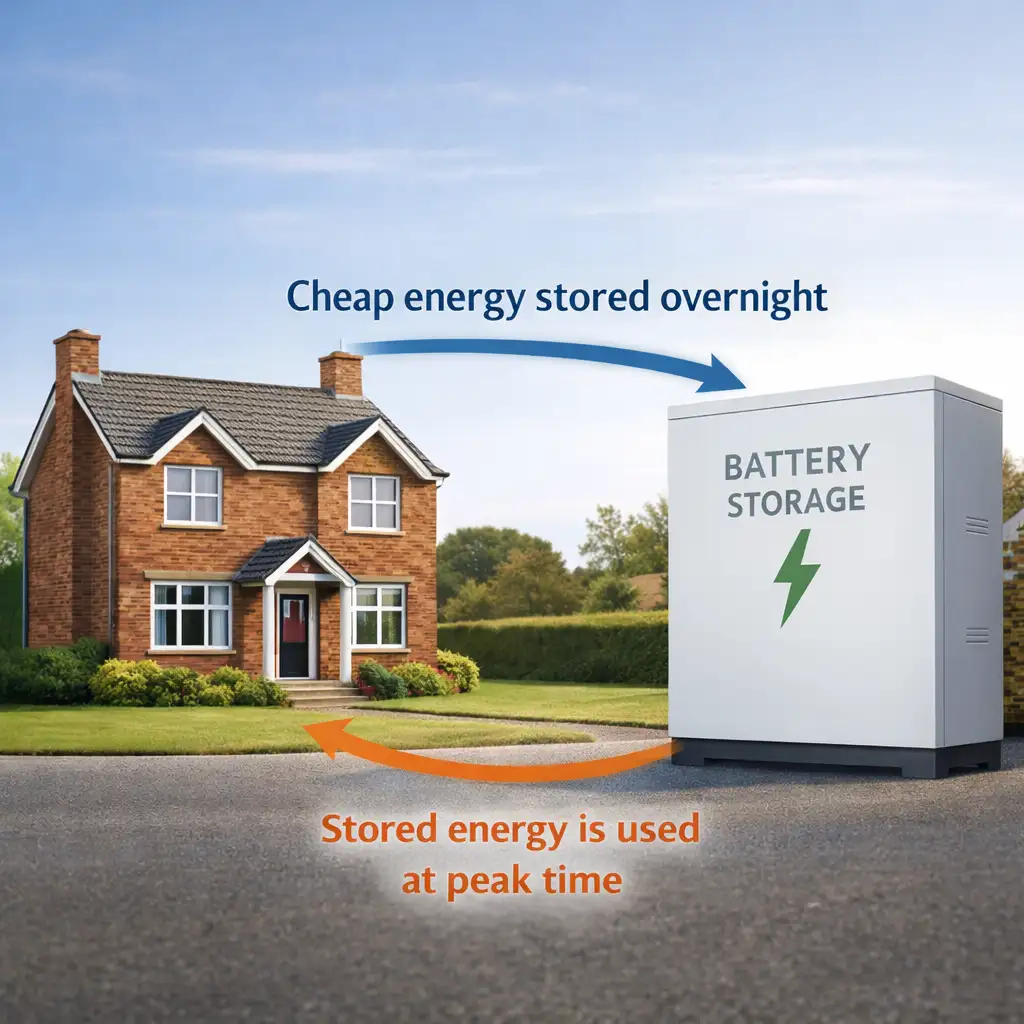
What is solar electric battery storage?
A home battery stores electricity as chemical energy and delivers it back to your home when you need it. You can charge it from the grid overnight, from solar PV during the day, or from both. This page focuses on the battery-only solution first, because it can reduce bills even before you install solar panels.
- Grid charging: charge at off-peak rates and use energy later.
- Solar charging: store surplus generation for evening use.
- Hybrid approach: charge from solar when available and top up overnight in winter.
Get a battery-only quote!
Free quote
Who is battery-only home battery storage best for?
A battery-only system is usually a strong fit if you can access cheap overnight electricity and use a meaningful amount of electricity during the day or early evening. The gap between day and night rates matters.
- Homes with a smart meter (often required for time-of-use tariffs).
- Households on an off-peak tariff with a meaningful overnight discount.
- Properties with daytime or early evening electricity use (family homes, home working, electric cooking).
- Homeowners who want flexibility now and the option to add solar later.
Benefits of batteries for storing solar electricity (and grid electricity)
Even if you start without solar PV, your system can later become batteries for storing solar electricity when you add panels.
Get your quoteVAT note:
In Great Britain, a 0% VAT rate applies to qualifying energy-saving materials in residential properties until 31 March 2027. HMRC guidance includes electrical storage batteries from 1 February 2024 (subject to the scheme conditions).






Home Battery Storage FAQs
-
Can I install home battery storage without solar panels?
Yes. Battery-only installation is a common approach. The battery charges from the grid, usually overnight, and supplies your home when electricity prices are higher.
-
Do I need a smart meter?
Many time-of-use tariffs require a smart meter. It also helps you measure savings and fine-tune your charging schedule.
-
Is Economy 7 the same as a smart time-of-use tariff?
Economy 7 has a set off-peak period with a higher peak rate. Smart time-of-use tariffs can include more time bands and may change pricing structures more dynamically.
-
Will a battery power my whole house?
It depends on the battery power (kW), capacity (kWh), and the loads you run at the same time. Many homes can run everyday loads, but high-demand appliances together can exceed the battery power rating.
-
Is VAT 0% on battery storage?
In Great Britain, a 0% VAT rate applies to qualifying installations of energy-saving materials in residential properties until 31 March 2027. HMRC guidance includes electrical storage batteries from 1 February 2024, subject to the scheme conditions.